No. 426 Self-Feed Rip Saw
Power-fed production ripping · 400-Series · January 1910
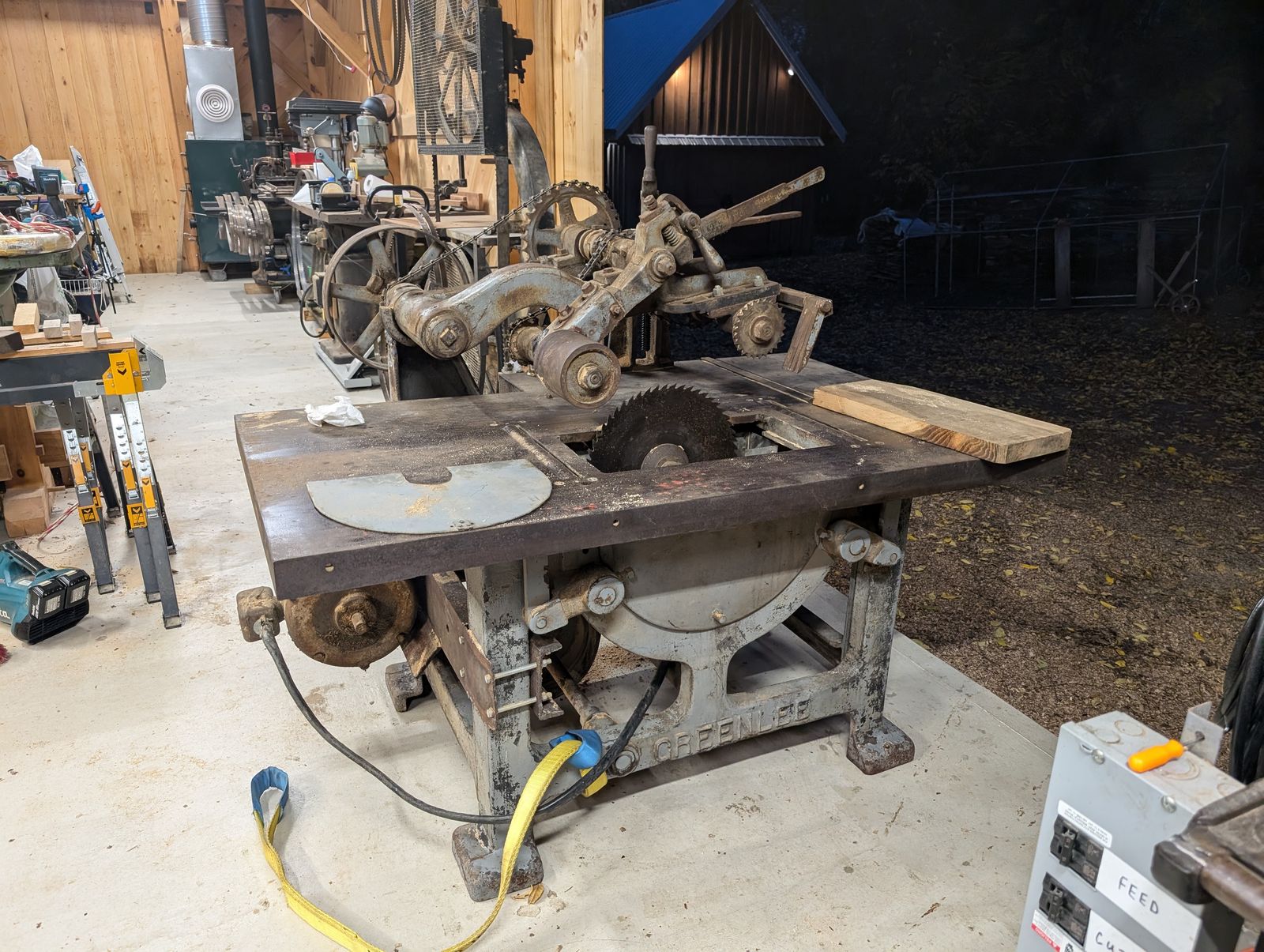
The machine
Before anything fine can happen in a woodshop, somebody has to break the lumber down — rip the wide, rough plank into working widths, over and over, all day. The self-feed rip saw is the machine that did it. Powered feed rolls grip the plank and pull it steadily through a fixed circular blade, so the operator’s job is to keep the machine fed rather than to push the cut. It is a production machine in the plainest sense: its output was measured in board-feet, and its virtue was that it never got tired.
The one in this collection
Serial 18929 left Rockford in January 1910, six years after the company’s move. The 400-Series were Greenlee’s saws, and the 426 sat at the bulk end of the line — sawmill breakdown, not cabinet work. Machines like this rarely survive: they lived hard lives in dusty rooms and were scrapped without ceremony when carbide and steel roller tables replaced them. This one made it out.
From the Catalog
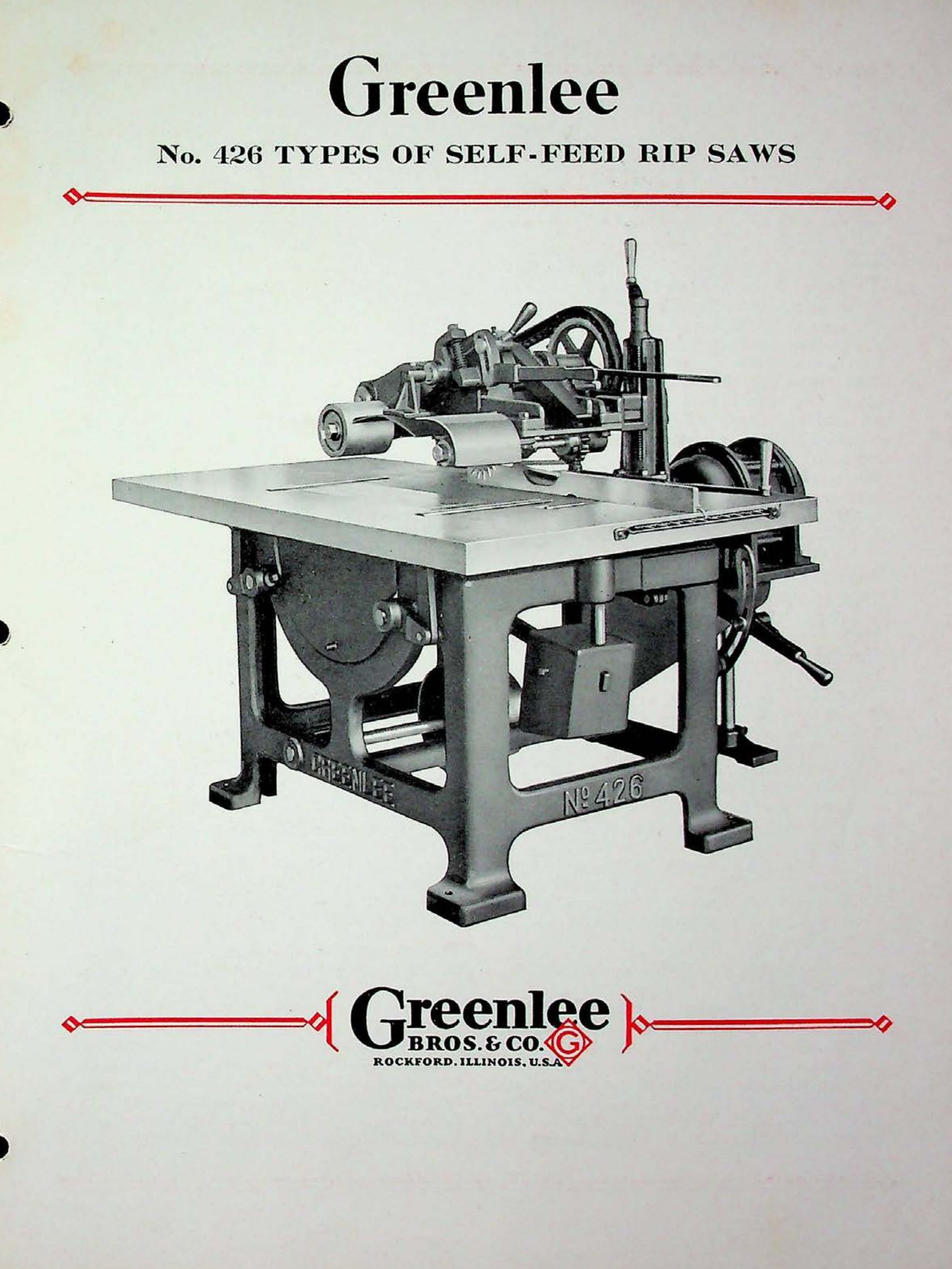
“The No. 426 type is intended, primarily, for use as a single-blade machine… Each machine has capacity for a 20-inch blade.” Greenlee Bulletin No. 426 · general-line catalog, 1930s
- Blade capacity
- 20″
Catalog scan courtesy of VintageMachinery.org.
Through the Catalogs
From the patent-1881 Self-Feeding Saw Table to the 400-Series bulletin.
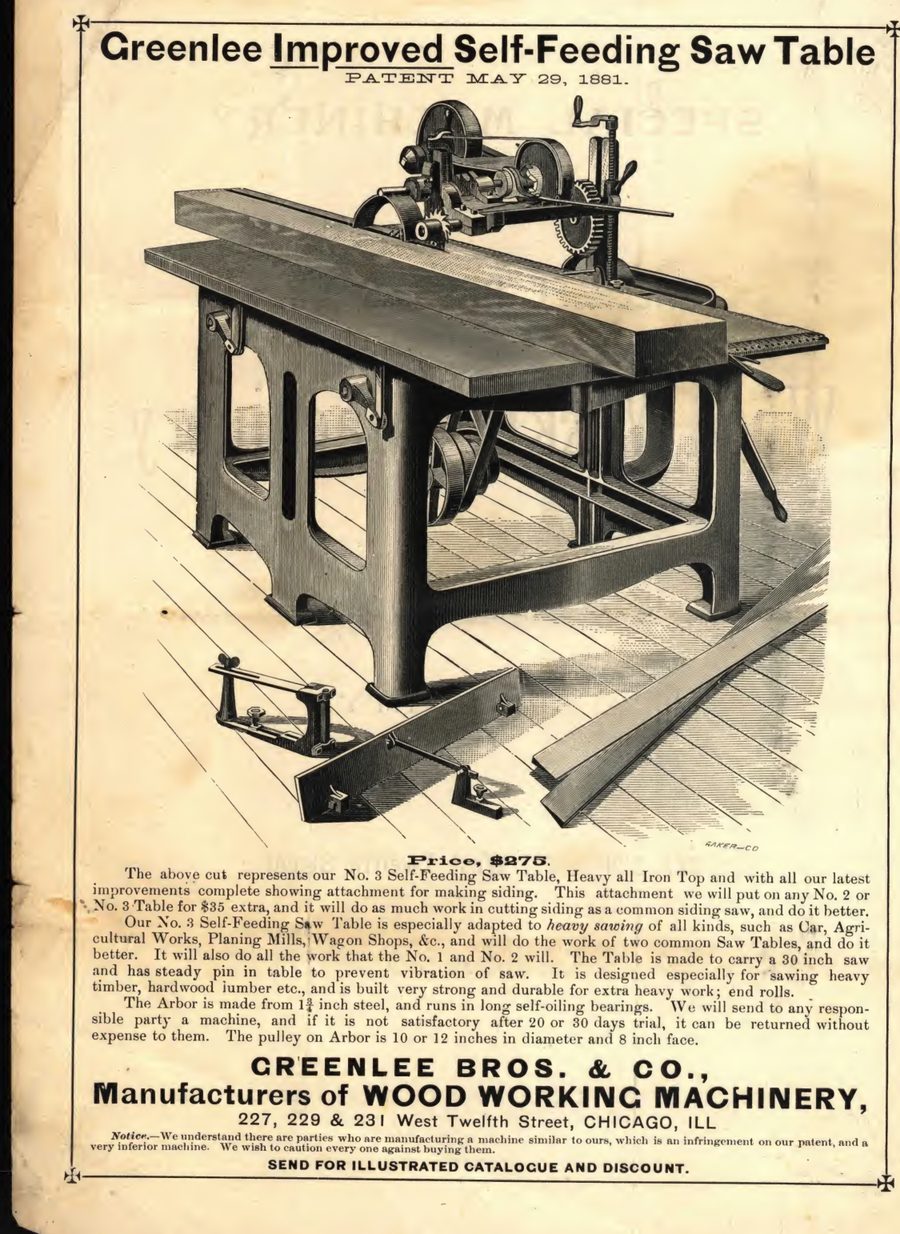
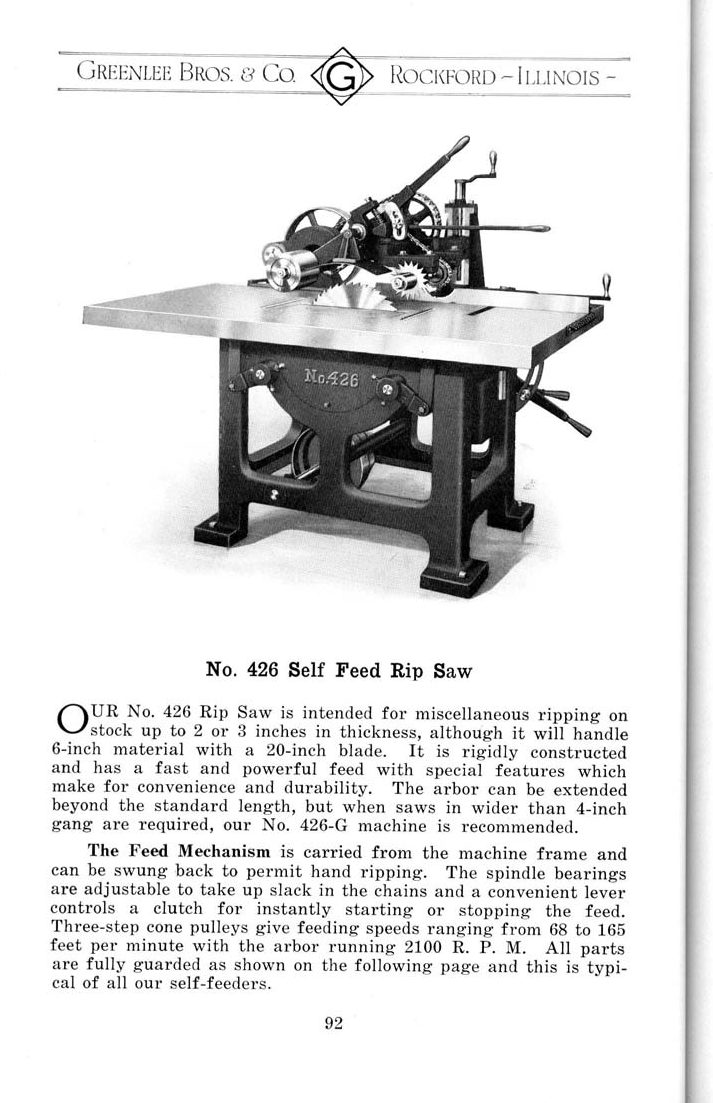
Every frame links to the full publication in the Paper Archive — scans courtesy of VintageMachinery.org.